The Reviewer You Never Budgeted: Accounting for Human Labor Inside 'Fully Automated' AI Pipelines
Ask a platform team what their AI system costs to run, and you will get a tidy answer: GPU hours, API spend, storage, egress. Ask them what it costs to keep the outputs acceptable, and the answer usually involves a pause, then a guess.
That guess hides one of the largest line items in production AI. Human-in-the-loop (HITL) labor—the reviewers, escalation handlers, and override operators who quietly correct, approve, and reject model outputs—rarely appears in cost models. It lives in a support budget, or worse, in nobody's budget at all. For US enterprises already operating on thin engineering margins, this blind spot distorts decisions about architecture, model selection, and roadmap priorities.
The Invisible Staffing Layer
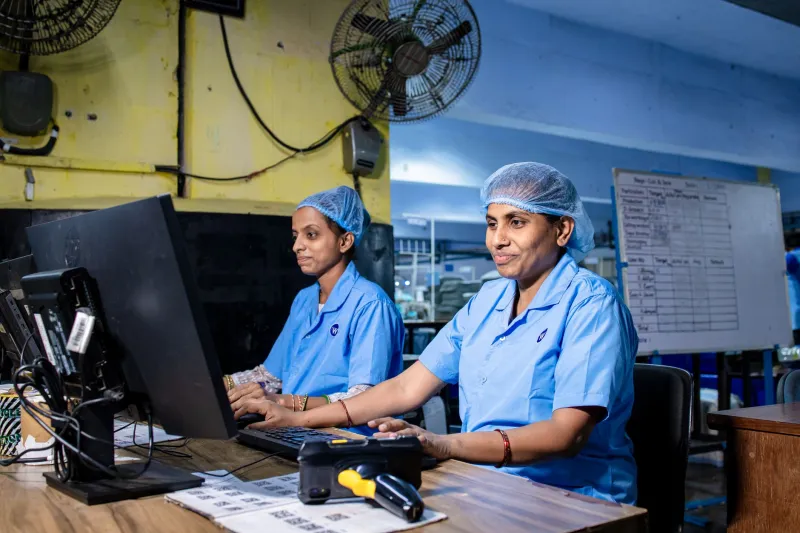
Consider a content moderation pipeline at a mid-sized marketplace. The classifier automates 92% of decisions. Leadership describes the system as "largely automated." But that remaining 8%—several thousand items per day—flows to a review team whose salaries sit in operations, not engineering. The classifier looks cheap because its true cost is carried by people who never appear in the architecture diagram.
This pattern repeats across industries: loan applications routed to manual underwriting, support tickets escalated to agents, medical coding outputs verified by credentialed staff. The automation percentage is a marketing number. The labor percentage is an engineering number.
Building a HITL Cost Model
To price this labor properly, teams should track four quantities per pipeline stage:
Volume of escalations. Not just the percentage flagged—measure actual items routed to humans daily, including retry loops and duplicate reviews.
Handling time. Average minutes per item, including context-switching overhead. Reviewers rarely handle one item in isolation; the real cost per decision is often double the naive estimate.
Fully loaded labor rate. Salary plus benefits, tooling, QA, and management overhead. A $30/hour reviewer costs the organization closer to $45–55/hour.
Error correction cost. When a reviewer misses something and it surfaces later—as a chargeback, a compliance finding, a churned customer—attribute that cost back to the stage.
Multiply these together and many teams discover their "cheap" model is subsidized by a payroll line that would fund a substantially better model, or a fine-tuning effort that cuts escalation volume in half.
When to Fix the Model Instead of Scaling the Team
The framework yields a useful decision boundary. Estimate the marginal cost of reducing escalation volume by one percentage point through model improvement—additional training compute, evaluation time, possibly a larger checkpoint—and compare it against the annualized labor cost of the escalations it eliminates.
In practice, three conditions favor investing in the model:
- Escalation volume is high and handling time is long. A 5% escalation rate at ten minutes per item is a payroll sink; shaving it to 3% pays for significant modeling work.
- The failure modes are clustered. If half of escalations trace back to two or three systematic errors, targeted retraining or retrieval augmentation is tractable.
- Volume grows with the business. Scaling a review team linearly with usage is a structural tax on growth. Improving the model is a fixed cost that amortizes.
Conversely, keep the human layer when escalations are rare, handling is fast, or the residual cases are genuinely ambiguous—some judgment calls are not model problems, and pretending otherwise wastes engineering time.
Making the Cost Visible
The hardest part is often organizational, not analytical. HITL labor hides because it crosses budget lines. The remedy is to instrument it like any other dependency: log every human touchpoint with a stage identifier and time spent, export it into your cost dashboards, and report it alongside inference spend in quarterly reviews.
Some organizations go further and assign the review budget to the team that owns the model. When the ML group feels the labor cost of its own error rate, prioritization sharpens quickly.
Conclusion
An AI system is only as automated as its most expensive human dependency. By pricing HITL labor as a first-class engineering cost—measured, attributed, and reviewed like compute—teams gain an honest picture of what their pipelines actually cost and a rational basis for choosing between headcount and model investment. The alternative is an architecture that looks efficient on a dashboard and leaks money everywhere else.