Seven Failure Modes Every Agentic System Reveals After the Demo Ends

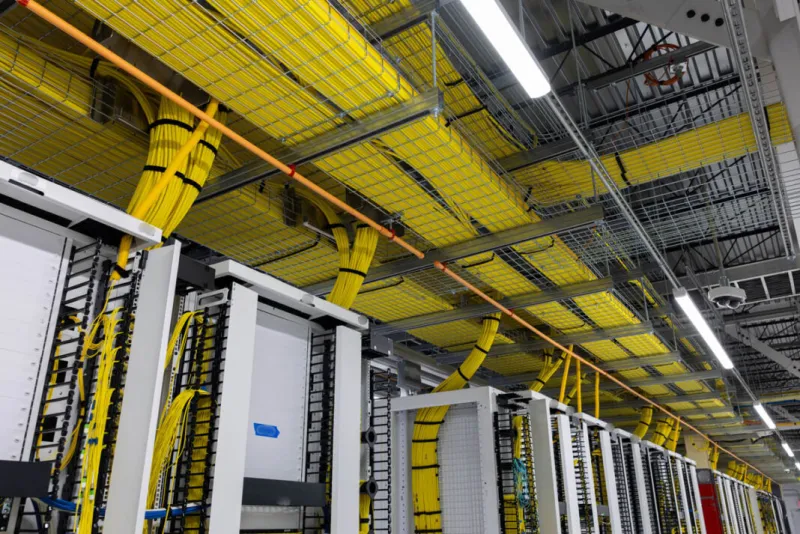
Photo by Photo by Tyler on Unsplash on Unsplash
An LLM agent demo is a carefully rehearsed play. The tools are warm, the prompts are tuned, and the happy path has been walked a hundred times. Production is different: the agent meets adversarial inputs, flaky APIs, and its own tendency to reason itself into circles. Teams deploying agentic systems in 2025 keep discovering the same failure modes—so we have cataloged the seven most common, along with the guardrails that contain them.
1. Tool-Call Loops That Burn the Budget
An agent retries a failing API, gets an error, reformulates, retries again. Twenty minutes and two hundred tool calls later, the task has failed and the API bill has not. Guardrail: enforce per-task call budgets and cost ceilings at the orchestration layer, not in the prompt. Prompts are suggestions; limits are enforcement.
2. Planning Cascades
Agents plan in steps, and each step conditions on the output of the last. A small misreading at step two—a wrong file path, a misparsed date—propagates until the agent confidently executes an elaborate plan built on a false premise. Guardrail: insert verification checkpoints. After critical steps, have a cheaper model or deterministic validator confirm the intermediate state before the plan proceeds.
3. State Amnesia Across Long Tasks
Long-running agents exceed their context window and silently drop earlier constraints. The report that was supposed to use Q3 figures cites Q2, because Q3 scrolled out of view. Guardrail: externalize state. Store goals, constraints, and completed work in a durable scratchpad the agent re-reads, rather than trusting the context window as memory.
4. Destructive Action Without Confirmation
The agent that can write to production databases, send emails, or trigger payments will eventually do so at the worst possible moment. Demos never show the agent deleting the wrong table. Guardrail: classify tools by blast radius. Irreversible actions require human approval gates; everything else can flow autonomously. This is the single highest-leverage guardrail in the list.
5. Hallucinated Tool Usage
Agents invent tool parameters—guessing at schema fields, fabricating IDs, passing dates in the wrong format—and then interpret the resulting errors as new problems to solve, compounding the mess. Guardrail: validate all tool inputs against strict schemas before execution, and return structured, specific error messages the model can actually correct.
6. Infinite Delegation
Multi-agent architectures introduce a new pathology: agents delegating to other agents in circles. A supervisor hands off to a specialist, which escalates back to the supervisor, each hop consuming tokens. Guardrail: maintain a global delegation graph with cycle detection and a hard hop limit per task.
7. Success Theater on Ambiguous Goals
Given a vague objective, an agent will declare victory on whatever it managed to accomplish. "Update the documentation" becomes editing one file, then a confident completion message. Guardrail: require explicit acceptance criteria before execution begins, and have a separate evaluation pass check the final state against them—never trust the agent's self-assessment.
Observability Ties It Together
None of these guardrails work without visibility. Every tool call, delegation, and state transition should be logged with trace IDs, so that a 3 a.m. incident in Austin or Chicago can be reconstructed from the trace rather than guessed at from a user complaint. Teams that treat agent runs as distributed traces—span per tool call, attributes per decision—diagnose failures in minutes instead of days.
Conclusion
Agentic systems fail not because the underlying models are weak but because autonomy multiplies the surface area for error. Demos hide that surface area; production exposes it. Teams that budget tool calls, verify intermediate state, gate destructive actions, and trace every decision ship agents that survive their first month on call—and the ones that do not, learn these seven lessons the expensive way.